
Leveling Up
Winning Winter, Nervous System Freshness & General Fitness

A week after my half marathon I heard myself say,
I haven’t swum that fast in 17 years.
It was after a swim with my wife’s pals, who I call the Mon-stars (as in Monica’s All-Stars). Later that day, my calf tightened up. The combination of high load, high performance and niggles is something you should pay attention to.
The #1 mistake I made in my elite career was ignoring the combination. It cost me quite a bit of performance and results.
Resource: Alan’s article on leveling up is a fun read. He walks you through the weekly volume requirements from:
Level 1: Health & Fitness through, to
Level 6: Elite/Pro (full time athlete with ample empty space for recovery).
For 2026, I’m aiming to remain at Level 5: Top Amateur. When Lexi heads off to USC (Fall 2027), I plan to sample Level 6 loading. I turn 60 in 2028, so my work rate will be lower than my younger days.
Winning Winter
Molina and I have been swapping emails about life and college recruitment. I shared my race result and he mentioned a couple points that might interest.
Scott’s voice:
A 1:23 1/2 is damn impressive though, I thought you wouldn’t have even tried to run that hard until next spring.
And, I thought you would have gained a significant amount of weight by now and that would affect top end quite a bit, so your engine must be running very good.
He’s right on all counts - he knows me well.
My engine was prepared, but my legs weren’t. That’s why I’ve been nursing a calf niggle since the race. Given we’re in winter, I made the decision to bite the bullet and heal up. Last winter, I took an entire month (!) off running due to a proper injury.
Always better to keep things small than grind through to injury.
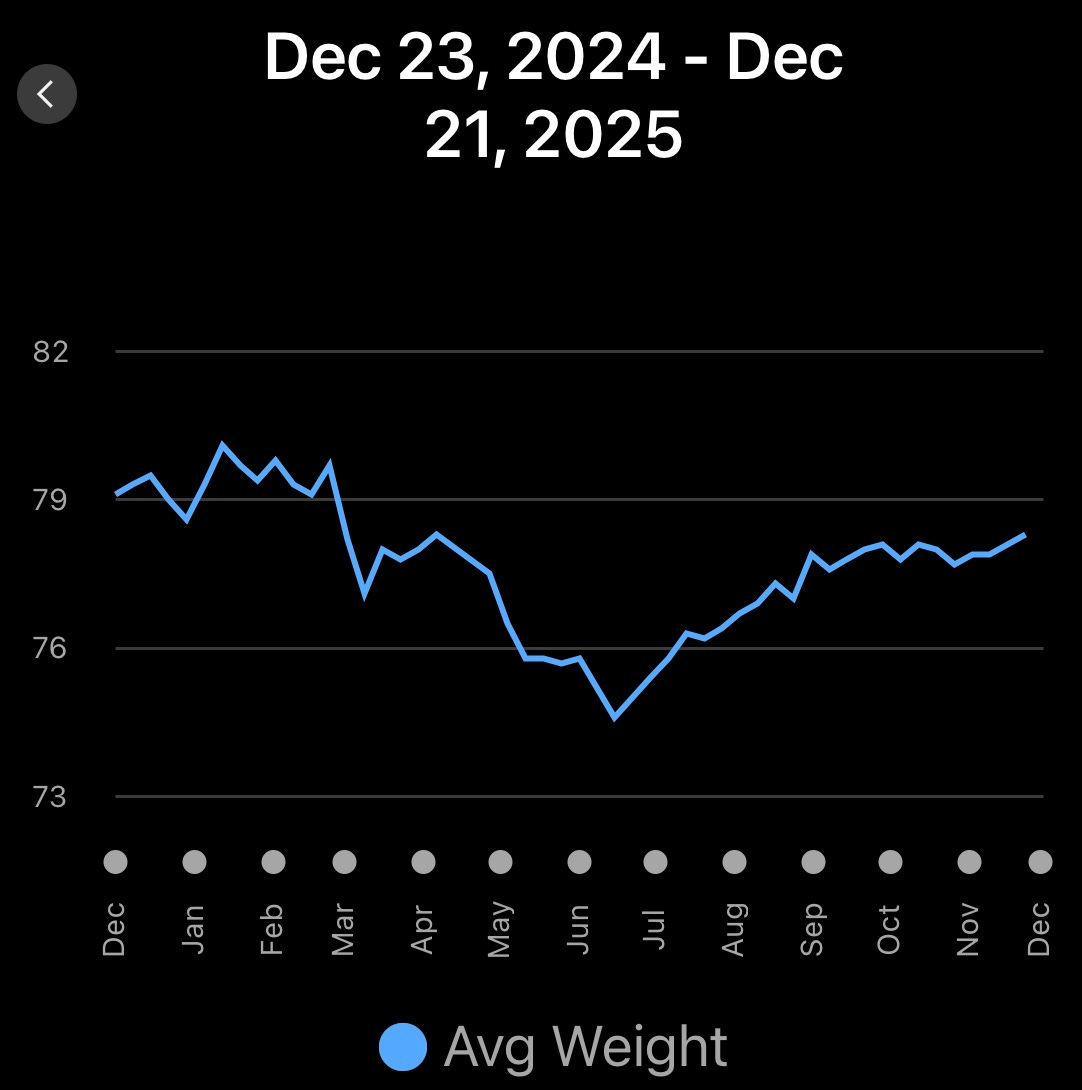
When Scott was coaching me, I would (try to) stay lean year round. This appeared to work great until it didn’t. Wintering in NZ, with Scott, he saw me balloon WAY up on several occasions. I can gain weight faster than what you’d read in any medical textbook.
Having learned from those experiences, I no longer try to stay super lean. What I do is gain weight on purpose as I move into my anabolic period. I’ve written lots of articles/videos about that so I won’t repeat.
I will reiterate the key errors I’ve made:
Not regrouping after I clearly hit a new level.
Seeking to hold race fitness across a winter.
Staying well below my strongest training weight for extended periods of time.
When you experience the errors, remember you are not alone.
Why Fast?
How the heck was I able to run fast with little specific training?
My nervous system was fresh.
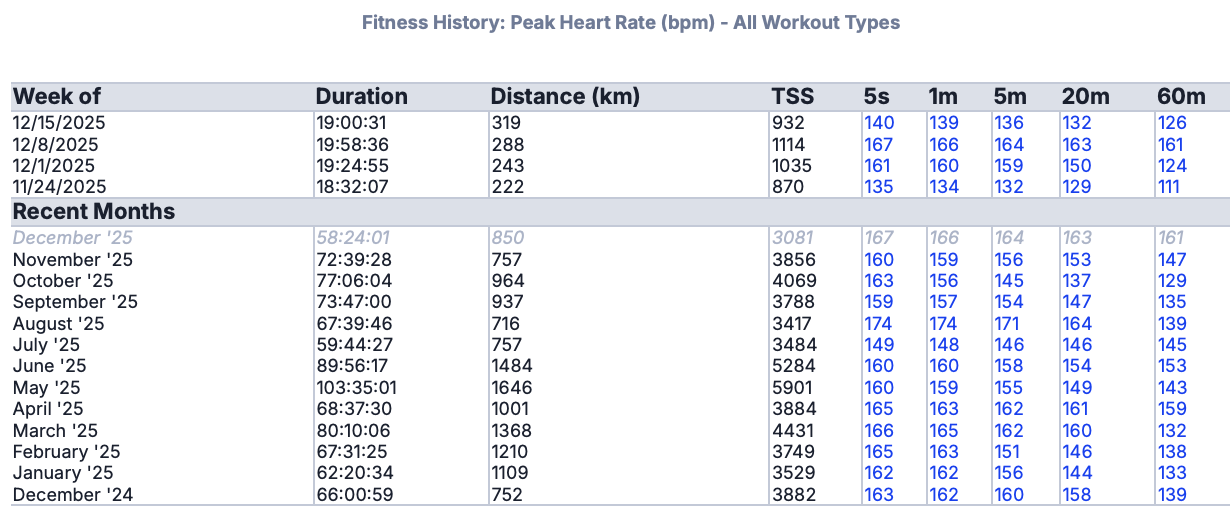
Our brain needs to green light hard efforts.1 Since my season wrapped up in July 2025, I did an effective job of getting my brain used to going hard.
5 minute column: In the week of December 1st, I hit 159 bpm (at altitude) during a 5K race.
20 minute column: The 164 bpm in August 2025 was the end of a hot tropical run (addressed in my max heart rate seminar, below).
60 minute column: My highest number for 2025 is during December’s half marathon race (161 bpm). There is little reason to take the risk, and generate the fatigue, from a true 60-minute max in an Ironman-focused year.
Many athletes, especially those with strong sympathetic drive2, ignore my point about risk:reward and fatigue trade-offs. They frequently rev to max. This is a costly form of stress because it can slow adaptation and disrupt emotional stability.
As you can see in my Peak Heart Rate History, I don’t have that issue. My issue is firing up my sympathetic system. I’m exceedingly cautious with high intensity. In my swim training, I have been specifically training my nervous system.
I use long warm-ups/cool-downs to prepare and settle myself.
My key workouts contain a sustained 40-60 minute main set.
I rarely swim hard on short rest. When I swim hard, I use additional rest to reduce the sustained stress of the workout.3
My hypothesis: There is nervous system carryover from one sport to another. Because I crank stress rarely, I’m fresh when it’s time to activate sympathetically.
FWIW, after 60 minutes at 94% of max I was left with an impression that it was a poor decision for health. Hard racing feels catabolic and unhealthy.
General Fitness
My anabolic block has left me generally fit.
The best thing I’ve learned from John in the last 1,200 days is it only takes six weeks to get race ready when we have deep general fitness.
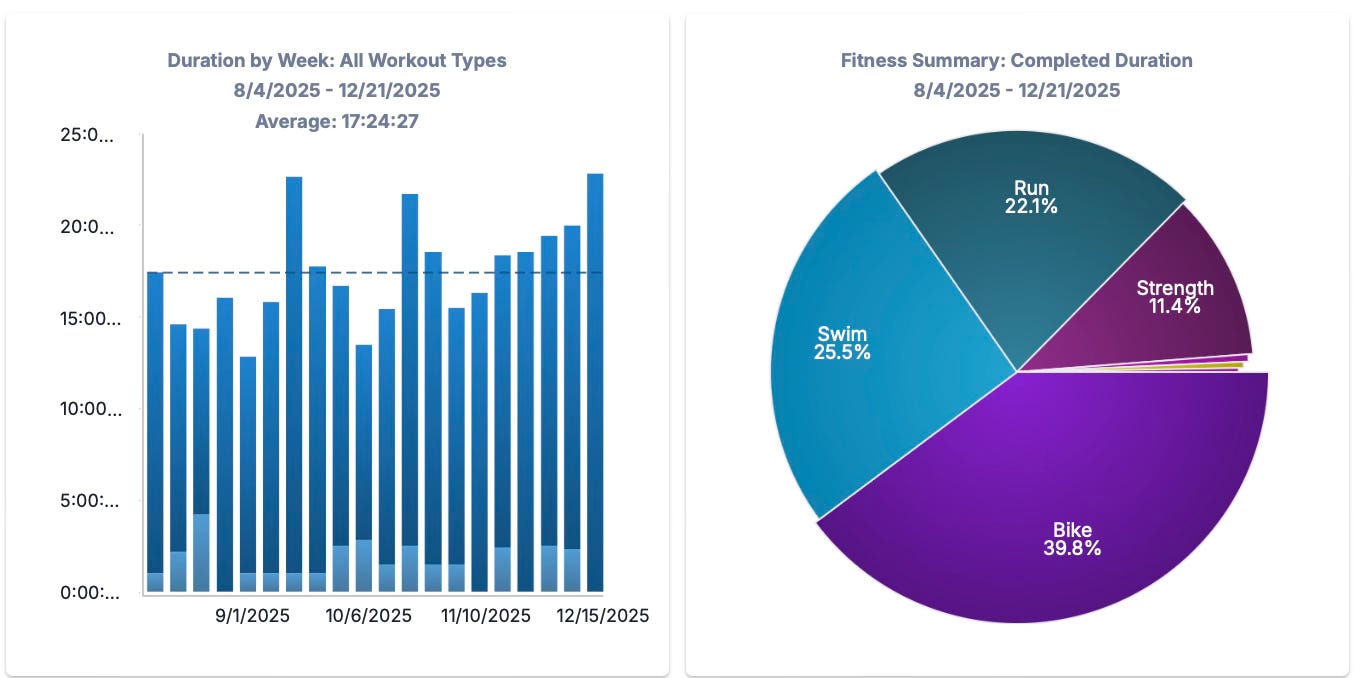
A 20-week anabolic block focused on general fitness will take you to a new level. General fitness is best done with a mixture of cross training and strength.
I have friends that benchmark and train great. However, when it comes to racing, their brains refuse to green light race stress. As a result, they underperform their training.
Save special efforts for race day.
An athlete with strong sympathetic drive will look excellent in the lab.
“Hard” is a Red Zone feeling. “Fast” is a Tempo Zone feeling. The difference is subtle and we need a wide Green Zone to be able to feel it.
Green Zone = Anabolic
Tempo Zone = Can be anabolic or catabolic
Red Zone = Catabolic
With a narrow Green Zone, everything above “easy pace” is stressful.
Knowing when to go "that deep" is v. imp through one's career in endurance sports and more so after a certain age (that age will vary upon the athlete's specific makeup).
At this point in my life, those deep, deep efforts are (usually) reserved for racing.
This IS a problem when you don't race all that often.
Getting to that point when you are just under the edge, and then sustaining that output, I think, even for 60 plus athletes is a trainable skill. I just have to figure out how I can set that up in my training....mainly with running because Zwift can do it for me on the bike + I swim with a squad and Jonny 0 and his mercenaries can treat some sets like life or death races.
Over many years of mistakes which have led to over reaching and overtraining, ignoring the nervous system was costly.
In my younger years, I had the power, speed and endurance. I’d continually rev the body, always pushing hard. Easy days would only happen when I was fatigued.
These days, intensity control is at the forefront of my mind. I actually find that these days that it’s my brain that doesn’t want the high heart rate, therefore any red zone work is mainly done at half marathon pace and this revolves more when the brain is ready.
Fortunately as I’ve lost a lot of power and speed, I can’t dig deep like I once could. I’m rectifying this as of last week in the gym, but that’s another story.
I’ve had times on the treadmill, where I almost get a compression on the brain or a brain fog during the interval. It’s a sign that it’s time to call it quits. I’m not physically tired, but my brain doesn’t want to go there.
Thanks, your writing’s just confirm everything I’ve experienced. I’ve read and been across endurance sports as a fan boy since 1990.
Never has anything I’ve ever read continuously nail it and give assurance to people that what they feel and should consider are experienced by others. Yourself, Alan cousins and Inaki are just amazing resources .
Thankyou and merry Christmas and a happy new year to you and your family