
No Easy Way
But Lots of Easy Training

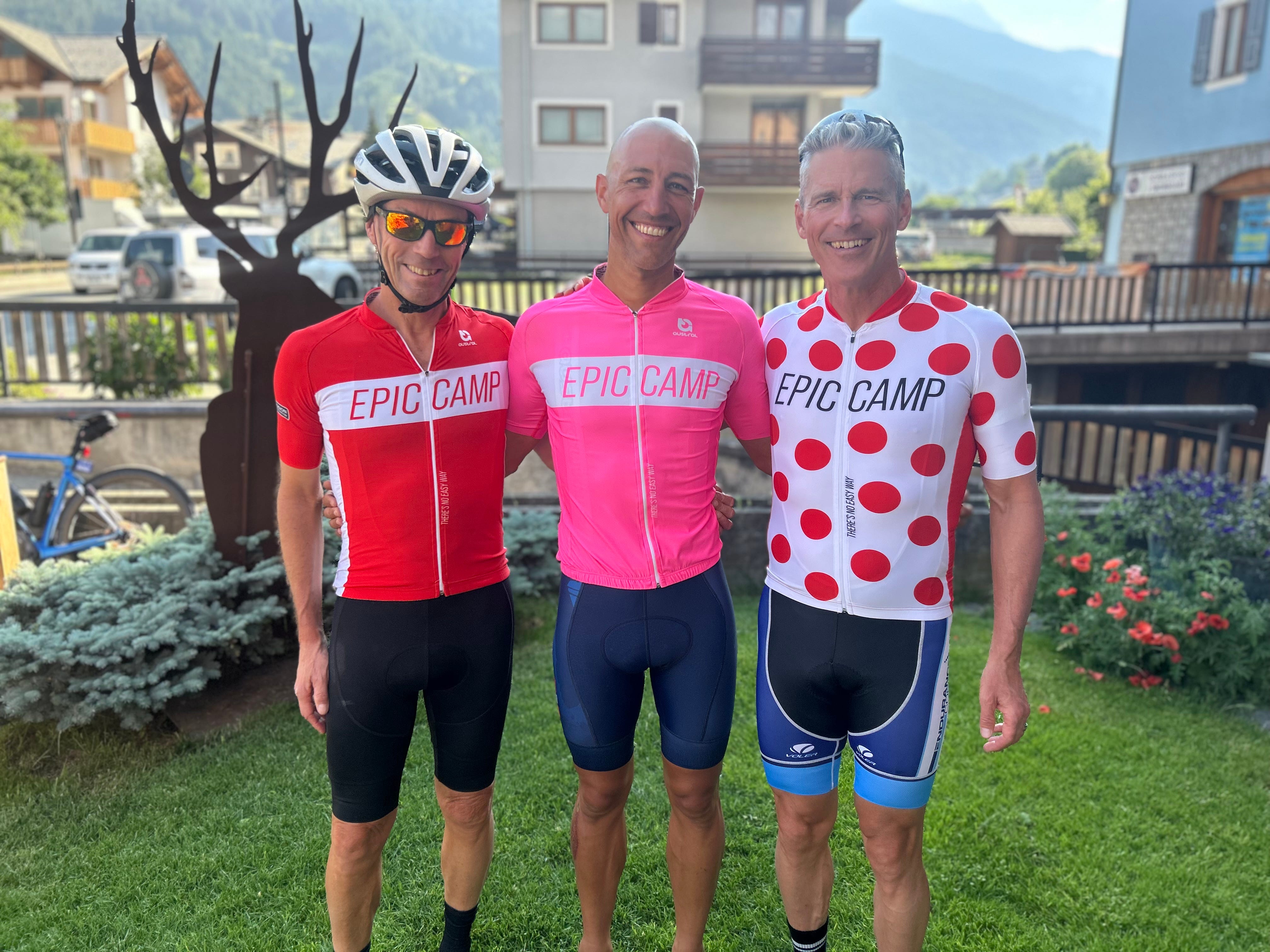
If you look at the zipper on the Polka Dot jersey, you can see the words No Easy Way; it’s the camp motto. Some folks take the motto to mean, go hard all the time. That wasn’t what we were getting at. What we wanted to get across was there’s a ton of work, and time, required to get good.
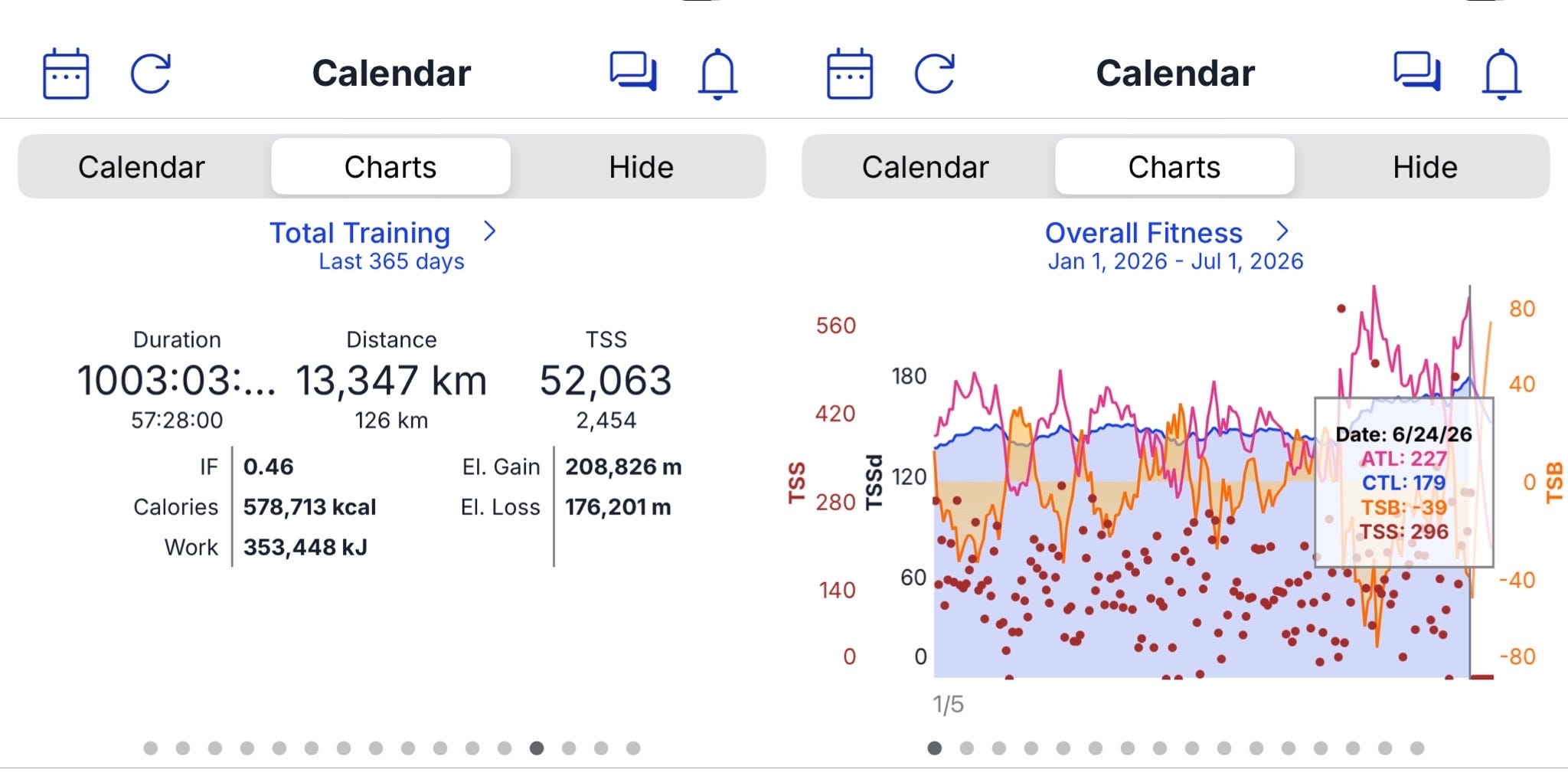
It’s not what we can do in 5, 20 or 60 minutes. Our ability to get close to our ultimate potential is determined by how much work we can absorb over a multi-year period.
Absorb is what I missed when I was younger.
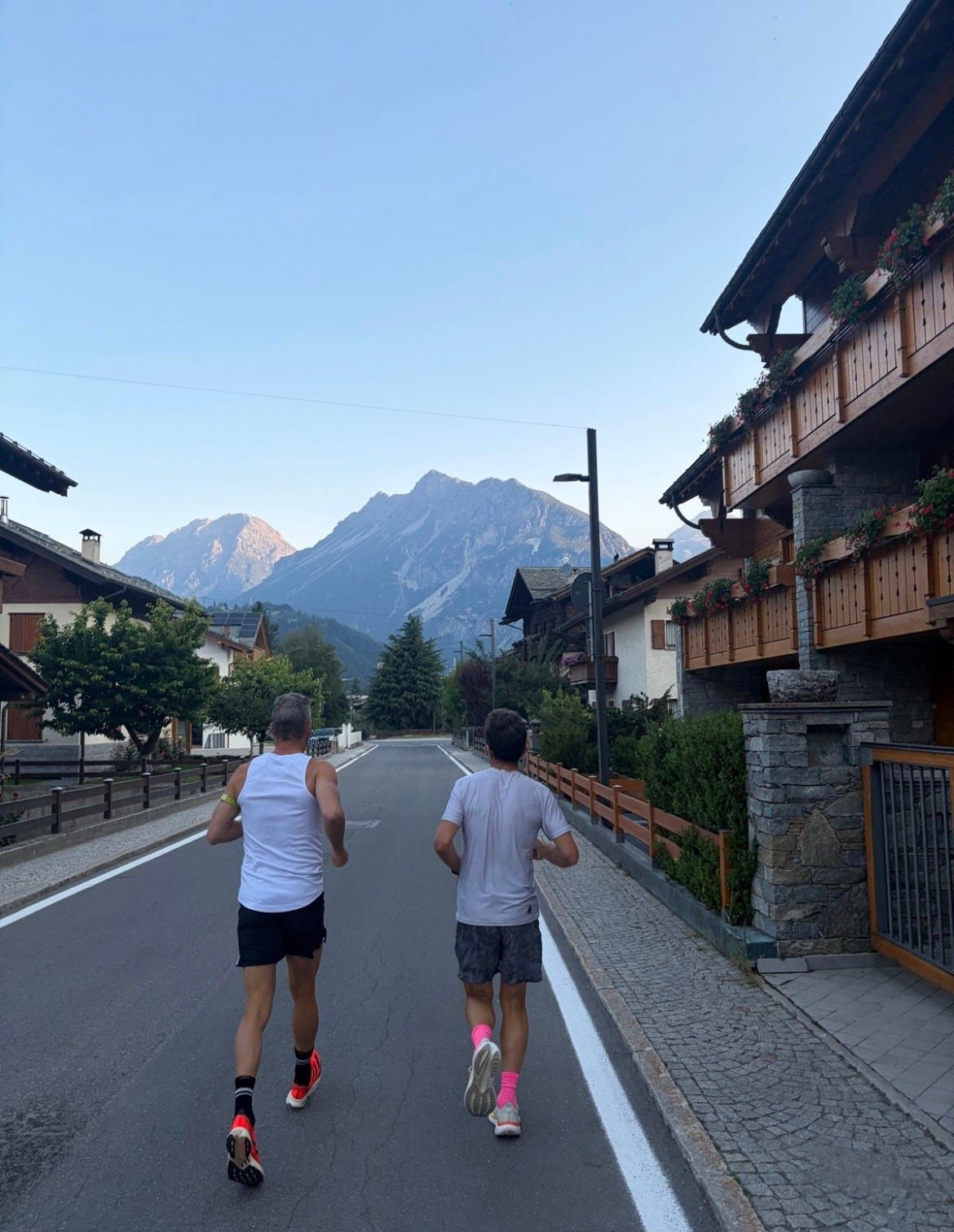
Torri di Fraele
737 meter climb, average heart rate to the top was 104 bpm. When people think about doing big training, or getting better, they gravitate to hard training. They do painful workouts to boost their FTP, VO2max and/or 5km pace.
That’s not what it takes.
What we need to do is change our lives, and your minds, so we can relax and recover while exercising at an easy pace. We need to train our whole body, including all aspects of our nervous systems.
In order to benefit from a limited amount of peppy stuff (mostly Zone 3) we need to absorb a tremendous amount of easy training. Before we can absorb Aerobic Power training, we need to do Aerobic Capacity training. The Aerobic Capacity training requires the ability to recover while moving.
Aerobic Capacity = base training, general capacity.
Aerobic Power = raise the roof, specific capacity for shorter duration events (2-12 minutes).
Remember, as endurance athletes, our performance will always be dominated by aerobic capacity. To assess aerobic capacity, pay attention to low-end and late-workout performance.
Everybody (myself included) resists this reality and thinks there is a shorter, easier, more effective way to build fitness. As a result, most of us never get truly fit. It simply takes more time that we are willing to commit. This is not a big deal. We can capture all the health benefits of exercise from a surprisingly small daily time commitment.
Energy Needs
I’m sick of eating. I don’t know how my pals who train 1,200 to 1,500 annual hours cope with all the food required.
Once again - No Easy Way.
++
Another tip if you aspire to big weeks: train the ability to eat while exercising.
This year I trained the ability to tolerate 150 grams of carbs every hour. Scale that for your FTP and body size. I am 300 watts (bike FTP), 4 min per km (run FTP) and 78 kilos.
++
When I’m pushing volume limits, I eat a ton. On my sustained tempo days, I consume a lot of sodium. This makes me feel, and look, like a well-trained sausage.
Let the record note that I had this look when Kristian Blummenfelt was in kindergarten and, before me, we used to tease Scott Molina that he was starting to look like the Sumo-nator (rather than the Terminator, his elite nickname). KB crushing everyone gave me the confidence to embrace my natural body type when training big.
++
I’m looking forward to getting my volume down and shifting back to my normal nutrition. I’m at the point where I’m cutting open my pain-au-chocolate and stuffing it with Nutella, then tossing down 1,000 kcal on an easy ride, snacking on a chocolate bar while writing, and eating a pre-lunch of muesli/greek yogurt/chocolate milk.
Post-camp food taper starts soon, but not yet.
To adapt, we gotta eat.
Congrats on reaching that 1000hr mark! Incredible amount of work!!
Nutella and Croissants....food of champions. The Italians and French know how to bake bread :)